
Крушение цен или "лохотрон" недвижимости в Торонто
-
ukrainian
- Заслуженный форумчанин
- Сообщения: 288
- Зарегистрирован: 31 янв 2010, 07:54
Re: Крушение цен или "лохотрон" недвижимости в Торонто
Canadian household debt is rising
Much of Canadians’ rising household indebtedness is being fuelled by cheap foreign capital, Mark Carney, governor of the Bank of Canada, said yesterday.
Mr. Carney has repeatedly warned over the past year about excessive consumer borrowing – particularly around mortgages – but Monday fleshed out his concerns, noting that the phenomenon is being enabled partly by buyers from “abroad” and that the trend is “unsustainable.”
Speaking to a business group in Waterloo, Ont., Mr. Carney said the growth in domestic demand and household spending has helped boost Canada’s economy, but “the limits to this growth model are becoming clear.”
Ballooning household debt levels represent the biggest single risk facing the Canadian economy, according to the Bank of Canada.
In the financial crisis that began in 2008, the central bank lowered interest rates to encourage borrowing and revive the economy. But much of the lending that followed was not to businesses but to consumers focused on buying homes.
Even after the economy revived, the low interest rates remained in place, continuing to spur the spending spree.
Canada’s banks mostly emerged from the crisis unscathed, which helped burnish their international reputation. It’s also why foreign investors – especially in the United States – are so keen to buy bonds issued by Canadian banks.
A primary reason for the strong demand is that many of the bonds are backed by mortgages that are guaranteed by the Canada Mortgage and Housing Corp.
In 2011 the big six Canadian banks issued a total of $74-billion of term bonds, of which 64% was sold to foreigners, according to George Lazarevski, an analyst at BMO Capital Markets. They raised “a lot of term funding outside of Canada,” said Mr. Lazarevski. He said buyers were mostly in the United States, Australia and Switzerland.
A significant chunk of that funding, or about $25-billion – was in the form of bonds backed by mortgages insured by the CMHC, a Crown corporation.
“The Canadian dollar is consistently strong, our fiscal situation is still attractive relative to much of the developed world, and even at the provincial level – there’s still plenty of fiscal capacity to raise deficits if backs are against the wall,” said BMO economist Robert Kavcic.
Mr. Carney’s comments on household indebtedness were within the context of the main theme of his speech: the need for Canadian companies to “refocus, retool and retrain” if the country is to compete in emerging markets.
Mr. Carney said the growth in domestic demand and housing-driven spending has helped boost Canada’s economy, but “the limits to this growth model are becoming clear.”
Mr. Carney also pointed to ongoing uncertainty over Europe’s debt crisis – despite some recent signs of improvement – and a modest recovery in the United States, both regions where Canada is dependent for the bulk of its exports.
“Emerging markets represent the greater opportunity for Canadian exporters. Since the recession, these economies have accounted for roughly two-thirds of global economic growth and one-half of the growth in global imports.”
Business must develop new markets but also and new products, Carney said. As well, companies should “further exploit the tremendous opportunities in mobile computing and customer-focused applications. In addition, they need to invest in new plants and equipment.
“Innovation is critical to our success and Canada’s record is only average,” Mr. Carney said.
Source: John Greenwood, Financial Post
-
Vladimir611
- Заслуженный форумчанин
- Сообщения: 9924
- Зарегистрирован: 28 апр 2012, 21:51
- Откуда: Питер -> Рамат Ган -> Анкастер
Re: Крушение цен или "лохотрон" недвижимости в Торонто
Товарищу Карни, вместо того чтобы заниматься профессорскими лекциями на тему: "причины увеличения долга среднестатистической канадской семьи" надо было бы заняться прямыми своими обязанностями и решить не стоит ли увеличить процентную ставку. Его разглагольствования имеют определённый смысл. Такая реторика, исходящяя от него, по идее должна сигнализировать народу намерения Банка Канады. Проблема в том, что он уже настолько долго использует эту риторику, что её уже никто не воспринимает всерьёз. Два подъёма по 0.25% выбили бы все спекулятивные настроения из нашей недвижимости. Просто люди вернулись бы на замлю. Проблема в том, что он больше думает о своей будущей (по слухам) работе на посту главы Банка Англии и не против, чтобы корректировкой занимался его преемник.
-
ukrainian
- Заслуженный форумчанин
- Сообщения: 288
- Зарегистрирован: 31 янв 2010, 07:54
Re: Крушение цен или "лохотрон" недвижимости в Торонто

ну пол процента вряд ли сильно помогут ( хотя намек инвесторам может дать ) особенно если с историческим уровнем сравнить .
ПС А в общем интересует Ваше мнение на рынку недвижимости Канады , по сравнению с Испанией , США и Германией , я там выше приводил примерные графики изменения цены на всех рынках . Мне кажется ( могу ошибаться ) очень значительная спекулятивная составляющая . Особенно в разрезе Германия против Канады .
-
Vladimir611
- Заслуженный форумчанин
- Сообщения: 9924
- Зарегистрирован: 28 апр 2012, 21:51
- Откуда: Питер -> Рамат Ган -> Анкастер
Re: Крушение цен или "лохотрон" недвижимости в Торонто
Вопрос не в полу проценте, а в сигнале, который посылает банк Канады. Ведь это просто обозначение тенденции. Сейчас никто не верит, что банк собирается бороться с ростом долга всерьёз. Два подъёма прайма подряд по 0.25% привели бы к куда более высокому подъёму ставок на заёмы, сами по себе небольшие поднятия прайма банки уже забили в заёмы, которые они предоставляют.
-
Vladimir611
- Заслуженный форумчанин
- Сообщения: 9924
- Зарегистрирован: 28 апр 2012, 21:51
- Откуда: Питер -> Рамат Ган -> Анкастер
Re: Крушение цен или "лохотрон" недвижимости в Торонто
Спекулятивная составляющяя в Канаде сейчас минимальна и сосредоточена в паре районов: Ванкувер, части Торонто может ещё что-то. В отличии от Штатов 5-7 летней давности никто не покупает недвижимость в расчёте flip её через год. Но есть другая проблема. Люди перестали понимать, что недвижимость ходит не только вверх, но и вниз. Поэтому хоть и не покупают из спекулятивных побуждений, покупают больше чем могут себе позволить; вниз ведь цены не пойдут 
-
asa1973
- Заслуженный форумчанин
- Сообщения: 292
- Зарегистрирован: 12 апр 2012, 13:10
- Откуда: Burlington, ON
Re: Крушение цен или "лохотрон" недвижимости в Торонто
В защиту CMCH скажу...
Нонче стало модно на всех форума х при обсуждении недвиги говорить мол никто ниче не делает и пр....
Такая себе визайтинщина, когда слов важнее дел. А тут часто деляют, но не трубят об этом в желтой прессе.
Например, уже как год CMCH УЖЕСТОЧИЛО критерии при выдаче моргичей с дауном ниже 20%. Например, они почти не страхуют моргичи которые "впритык" (т.е. максимально дозволенный debt ratio и 5% даун)
"Понаехавшим" ввиду неподтвержденности кредитной истории и происхождения средств на дп тоже или занижают планку лимита или требуят даун 10% и выше...
Tак что "если у вас нет паранои, это не значит что за вами не следят"... кому надо ситуацию уже отрабатывает. Да, они не делают громких ПР-акций как этого хотелось бы любителям сыграть на понижение...но это и НЕ их задача. Свою задачу - отсекать ненадежных заемщиков (ну или не давать им хапнуть много) в ГОСУДАРСТВЕННО регулируемом секторе - они делают.
Credit card debt это отдельный, САМОрегулируемый сектор, который "если чо" госво оплачивать не будет
Хочет банк выдать кредитку имяреку - его возмпжность и головная боль.
ЗЫ: статья ксат фих какого года? данные 2009м обрываются а на дврое 2012...
Нонче стало модно на всех форума х при обсуждении недвиги говорить мол никто ниче не делает и пр....
Такая себе визайтинщина, когда слов важнее дел. А тут часто деляют, но не трубят об этом в желтой прессе.
Например, уже как год CMCH УЖЕСТОЧИЛО критерии при выдаче моргичей с дауном ниже 20%. Например, они почти не страхуют моргичи которые "впритык" (т.е. максимально дозволенный debt ratio и 5% даун)
"Понаехавшим" ввиду неподтвержденности кредитной истории и происхождения средств на дп тоже или занижают планку лимита или требуят даун 10% и выше...
Tак что "если у вас нет паранои, это не значит что за вами не следят"... кому надо ситуацию уже отрабатывает. Да, они не делают громких ПР-акций как этого хотелось бы любителям сыграть на понижение...но это и НЕ их задача. Свою задачу - отсекать ненадежных заемщиков (ну или не давать им хапнуть много) в ГОСУДАРСТВЕННО регулируемом секторе - они делают.
Credit card debt это отдельный, САМОрегулируемый сектор, который "если чо" госво оплачивать не будет
Хочет банк выдать кредитку имяреку - его возмпжность и головная боль.
ЗЫ: статья ксат фих какого года? данные 2009м обрываются а на дврое 2012...
-
ukrainian
- Заслуженный форумчанин
- Сообщения: 288
- Зарегистрирован: 31 янв 2010, 07:54
Re: Крушение цен или "лохотрон" недвижимости в Торонто
Ужесточили говорите , интересовался я тут в местном кредитном союзе условиями получения
стоимость дома 250 000
АТ 4 %
взнос 10 000
я аж сам офигел , честно говоря .
Скоро будет как в Штатах .
стоимость дома 250 000
АТ 4 %
взнос 10 000
я аж сам офигел , честно говоря .
Скоро будет как в Штатах .
-
ukrainian
- Заслуженный форумчанин
- Сообщения: 288
- Зарегистрирован: 31 янв 2010, 07:54
Re: Крушение цен или "лохотрон" недвижимости в Торонто
Старые данные говорите вот Вам свеженькие
What will Carney do if Canadian household debt keeps rising?
Date: Friday, May 11th, 2012
By Melanie Epp
Mark Carney believes that record high household debt is the number one threat to the economy. He also believes that if he raises interest rates it would hurt economic recovery, but slow spending.
“In exceptional circumstances,” he says, “If there are issues that threaten financial stability, such as household debt … the bank could use monetary policy for that purpose.” And Carney believes that we are well on our way to these “exceptional circumstances.” As a proportion of disposable income, household debt reached almost 151% by the end of last year. Currently, it stands at 153%.
Very soon, that number is expected to reach 160% – a number similar to that of the US just before the 2008 financial crisis.
“We have never been as indebted as we are today as individuals,” says Carney. “We’ve done analysis which shows that about 10 per cent of Canadians are vulnerable if interest rates returned to more normal levels, which will happen.”
Why is debt growing?
Currently, income growth is currently well below the rate of inflation. Because income growth has slowed, more and more Canadians are borrowing money to buy homes, or are taking loans out on their homes.
Despite what Carney says, though, private sector analysts keep telling Canadians that the Bank of Canada is unlikely to hike rates for at least another year, so many aren’t feeling the pinch. As long as the rates remain low, Canadians feel like they can afford the homes they’ve bought. Sure, record high debt doesn’t seem like an issue as long as home prices keep rising and interest rates remain low, but Carney warns that they’re not going to be this way forever.
As they certainly will, what happens if house prices drop and interest rates rise? Not only will Canadians see the value of their homes plummet, but they’ll also have higher debt to manage – all while income growth remains modest at best. The outcome? Canadians just won’t be able to keep up.
But will home values plummet? It’s hard to imagine, since they’ve been on the rise for so long with no sign of stopping. During an interview on CBC Radio’s The House, Carney told Evan Solomon that there are “issues in some segments” of the housing market, but he didn’t go as far as to say that a housing bubble exists in Canada.
“There are issues particularly in some parts of the country, in the condo market, without questions, where activity has been particularly strong,” he says. “And in some of our major cities, without question, evaluations are extremely firm.”
In particular, unsustainable condo markets in both Toronto and Vancouver have economists worried. The average home price in Vancouver finally declined in March from $823,749 to $730,998. In Toronto, however, the average home price continued to rise from $499,354 in February to $503,998 in March. Across Canada, the average home price is five times that of income, says Carney. The norm is 3.5 times higher.
While Carney says that there are a number of defense mechanisms that can be used to protect against a housing bubble, he suggests that it is ultimately up to Canadians themselves.
“First and foremost, it’s the decisions of the individuals who take out the loans, and Canadians are a smart and prudent people,” he says.
The responsibility, though, doesn’t just lie with Canadians, though; the banks and institutions are also responsible. They need to wise up and stop lending to people who clearly can’t afford the debt. Rates will rise and when the time comes, Canadians need to make sure that they will be able to carry their debt load.
What happens if debt becomes an issue? Without a doubt, some Canadians will be in over their heads when interest rates rise. Others will manage but be forced to reduce spending, a move that will help further slow economic activity.
Meanwhile, private sector analysts tell a very different story about the housing market. They almost unanimously agree that when compared to cost of renting and income, housing prices are too high in Canada. They suggest that a correction is coming, which could result in prices dropping by as much as 10-25%. In over-inflated markets, like those found in Vancouver and Toronto, those corrections may be even higher.
It’s not as if they’re not trying to fix the problem. Jim Flaherty, Minister of Finance, has made three attempts to deflate the housing bubble in the past six years by tightening mortgage-lending rules. Canada Mortgage and Housing Corporation (CMHC) have also done their bit to amend the system, as has the Office of the Superintendent of Financial Institutions (OSFI). In the recent federal budget, Flaherty announced that the government would introduce legislation that will increase governance over CMHC. And it since has.
Just last week, the Globe and Mail reported that Ottawa is “beefing up its scrutiny of CMHC and the more than $500-billion in higher-risk mortgages in its care.” The Conservative government has given OSFI, Canada’s banking regulator, new authority over CMHC.
Initially, the purpose of CMHC was to provide social housing and to insure mortgages for those who were unable to make down payments so that more Canadians could buy homes. Until recently, the federal minister of Human Resources oversaw CMHC. In 2007, CMHC’s mortgage portfolio had a legal limit of $350-billion. Since then, that limit has been increased three times to its current cap of $600-billion – a number that it is fast approaching. If mortgages run over, it’s Canadian taxpayers who’ll have to foot the bill, which is a scary thought since the pool is currently full of high-risk borrowers.
The government is also banning banks from using mortgages that are insured by CMHC as collateral on covered bonds. The practice, it says, goes well beyond CMHC’s mandate. Ottawa says that the new rules will ensure that CMHC’s commercial activities “promote and contribute to the stability of the financial system.” Although the CMHC has become an important financial institution, it has not been subject to the rules of OSFI, says Flaherty. Now it will be.
It’s not just CMHC that’s being scrutinized. Mark Carney has also spoken directly to the banks, asking them to get on board by curbing their lending practices.
Although Carney is constantly warning Canadians about rate hikes, he says that they are a last resort, only to be used if debt threatens the financial stability of the country. Rate hikes will only be used as an option to complement other measures, he says. If debt does continue to rise, though, Carney will intervene. A new agreement, which came into effect last year, gives him the power to act whenever he needs to, if necessary.
What will Carney do if Canadian household debt keeps rising?
Date: Friday, May 11th, 2012
By Melanie Epp
Mark Carney believes that record high household debt is the number one threat to the economy. He also believes that if he raises interest rates it would hurt economic recovery, but slow spending.
“In exceptional circumstances,” he says, “If there are issues that threaten financial stability, such as household debt … the bank could use monetary policy for that purpose.” And Carney believes that we are well on our way to these “exceptional circumstances.” As a proportion of disposable income, household debt reached almost 151% by the end of last year. Currently, it stands at 153%.
Very soon, that number is expected to reach 160% – a number similar to that of the US just before the 2008 financial crisis.
“We have never been as indebted as we are today as individuals,” says Carney. “We’ve done analysis which shows that about 10 per cent of Canadians are vulnerable if interest rates returned to more normal levels, which will happen.”
Why is debt growing?
Currently, income growth is currently well below the rate of inflation. Because income growth has slowed, more and more Canadians are borrowing money to buy homes, or are taking loans out on their homes.
Despite what Carney says, though, private sector analysts keep telling Canadians that the Bank of Canada is unlikely to hike rates for at least another year, so many aren’t feeling the pinch. As long as the rates remain low, Canadians feel like they can afford the homes they’ve bought. Sure, record high debt doesn’t seem like an issue as long as home prices keep rising and interest rates remain low, but Carney warns that they’re not going to be this way forever.
As they certainly will, what happens if house prices drop and interest rates rise? Not only will Canadians see the value of their homes plummet, but they’ll also have higher debt to manage – all while income growth remains modest at best. The outcome? Canadians just won’t be able to keep up.
But will home values plummet? It’s hard to imagine, since they’ve been on the rise for so long with no sign of stopping. During an interview on CBC Radio’s The House, Carney told Evan Solomon that there are “issues in some segments” of the housing market, but he didn’t go as far as to say that a housing bubble exists in Canada.
“There are issues particularly in some parts of the country, in the condo market, without questions, where activity has been particularly strong,” he says. “And in some of our major cities, without question, evaluations are extremely firm.”
In particular, unsustainable condo markets in both Toronto and Vancouver have economists worried. The average home price in Vancouver finally declined in March from $823,749 to $730,998. In Toronto, however, the average home price continued to rise from $499,354 in February to $503,998 in March. Across Canada, the average home price is five times that of income, says Carney. The norm is 3.5 times higher.
While Carney says that there are a number of defense mechanisms that can be used to protect against a housing bubble, he suggests that it is ultimately up to Canadians themselves.
“First and foremost, it’s the decisions of the individuals who take out the loans, and Canadians are a smart and prudent people,” he says.
The responsibility, though, doesn’t just lie with Canadians, though; the banks and institutions are also responsible. They need to wise up and stop lending to people who clearly can’t afford the debt. Rates will rise and when the time comes, Canadians need to make sure that they will be able to carry their debt load.
What happens if debt becomes an issue? Without a doubt, some Canadians will be in over their heads when interest rates rise. Others will manage but be forced to reduce spending, a move that will help further slow economic activity.
Meanwhile, private sector analysts tell a very different story about the housing market. They almost unanimously agree that when compared to cost of renting and income, housing prices are too high in Canada. They suggest that a correction is coming, which could result in prices dropping by as much as 10-25%. In over-inflated markets, like those found in Vancouver and Toronto, those corrections may be even higher.
It’s not as if they’re not trying to fix the problem. Jim Flaherty, Minister of Finance, has made three attempts to deflate the housing bubble in the past six years by tightening mortgage-lending rules. Canada Mortgage and Housing Corporation (CMHC) have also done their bit to amend the system, as has the Office of the Superintendent of Financial Institutions (OSFI). In the recent federal budget, Flaherty announced that the government would introduce legislation that will increase governance over CMHC. And it since has.
Just last week, the Globe and Mail reported that Ottawa is “beefing up its scrutiny of CMHC and the more than $500-billion in higher-risk mortgages in its care.” The Conservative government has given OSFI, Canada’s banking regulator, new authority over CMHC.
Initially, the purpose of CMHC was to provide social housing and to insure mortgages for those who were unable to make down payments so that more Canadians could buy homes. Until recently, the federal minister of Human Resources oversaw CMHC. In 2007, CMHC’s mortgage portfolio had a legal limit of $350-billion. Since then, that limit has been increased three times to its current cap of $600-billion – a number that it is fast approaching. If mortgages run over, it’s Canadian taxpayers who’ll have to foot the bill, which is a scary thought since the pool is currently full of high-risk borrowers.
The government is also banning banks from using mortgages that are insured by CMHC as collateral on covered bonds. The practice, it says, goes well beyond CMHC’s mandate. Ottawa says that the new rules will ensure that CMHC’s commercial activities “promote and contribute to the stability of the financial system.” Although the CMHC has become an important financial institution, it has not been subject to the rules of OSFI, says Flaherty. Now it will be.
It’s not just CMHC that’s being scrutinized. Mark Carney has also spoken directly to the banks, asking them to get on board by curbing their lending practices.
Although Carney is constantly warning Canadians about rate hikes, he says that they are a last resort, only to be used if debt threatens the financial stability of the country. Rate hikes will only be used as an option to complement other measures, he says. If debt does continue to rise, though, Carney will intervene. A new agreement, which came into effect last year, gives him the power to act whenever he needs to, if necessary.
-
ukrainian
- Заслуженный форумчанин
- Сообщения: 288
- Зарегистрирован: 31 янв 2010, 07:54
Re: Крушение цен или "лохотрон" недвижимости в Торонто
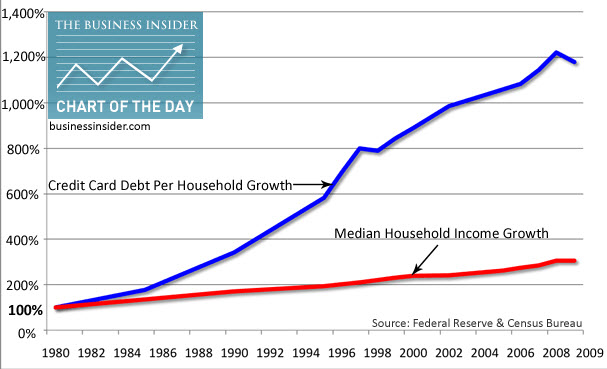
и график посвежее ...

и это без долгов за недвижимость
А здесь можно посмотреть рост долгов за недвижимость и сравнить с ростом доходов на первом графике .
и это без долгов за недвижимость
А здесь можно посмотреть рост долгов за недвижимость
и сравнить с ростом доходов на первом графике .
Последний раз редактировалось ukrainian 21 май 2012, 13:07, всего редактировалось 1 раз.
-
Vladimir611
- Заслуженный форумчанин
- Сообщения: 9924
- Зарегистрирован: 28 апр 2012, 21:51
- Откуда: Питер -> Рамат Ган -> Анкастер
Re: Крушение цен или "лохотрон" недвижимости в Торонто
Можно поинтересоваться, а какая связь между CMCH и Карни? Да, правила на мортгиджи в некоторой степени ужесточились, но до этого они за последние 15 лет не раз смягчались, да и самое главное, что вопрос не только в этом. Получить вы заём можете, но если процент крайне низкий, это стимулирует вас брать в долг больше во-первых, и превращать в долг уже наличное имущество (ту же недвижимость) во-вторых. И регулироваться это может Банком Канады. Может, но не делается.asa1973 писал(а):В защиту CMCH скажу...
Какая связь, кем гарантируется долг? Задача монетарной политики государства достигать баланса между ростом и перегревом. На сегодня перегрев налицо
-
Vladimir611
- Заслуженный форумчанин
- Сообщения: 9924
- Зарегистрирован: 28 апр 2012, 21:51
- Откуда: Питер -> Рамат Ган -> Анкастер
Re: Крушение цен или "лохотрон" недвижимости в Торонто
living under the motto: I spend, therefore I am
-
asa1973
- Заслуженный форумчанин
- Сообщения: 292
- Зарегистрирован: 12 апр 2012, 13:10
- Откуда: Burlington, ON
Re: Крушение цен или "лохотрон" недвижимости в Торонто
Ужесточили СТРАХОВАНИЕ, банки аппрув делают как и раньше только ПОЛУЧЕНИЕ моргичз оно не гарантирует...банк даст под "минимальные" условия, но если моргич не застрахуют...вы его не получите. А так да, "и вы говорите", банк даст кредит, чо ему клиента терять...если ему риски застрахуют. Попробуйте взять в КС моргич на этих условиях но БЕЗ страховки...шо, не дали, так отож...ukrainian писал(а):Ужесточили говорите , интересовался я тут в местном кредитном союзе условиями получения
стоимость дома 250 000
АТ 4 %
взнос 10 000
я аж сам офигел , честно говоря .
Скоро будет как в Штатах .
-
asa1973
- Заслуженный форумчанин
- Сообщения: 292
- Зарегистрирован: 12 апр 2012, 13:10
- Откуда: Burlington, ON
Re: Крушение цен или "лохотрон" недвижимости в Торонто
Навскидку, "попугаи" на двух графиках разные, в итоге яблоки с апельсинамиukrainian писал(а):и график посвежее ...
и сравнить с ростом доходов на первом графике .
график non-morgage consumer debt с первого графика абсолютно не совпадает с оным же (по графике) на втором
В научных кругах за такую подачу стат.материала бьют по рукам обычно - вроде и графики-циферки есть, а сравнить нельзя, см. выше...
ЗЫ: мне чиста интересна что сторонники теории мирового заговора на рынке недвиги предлагают ДЕЛАТь, например семье с двумя детьми? КАК жить? Платить такую же сумму как за моргич, но жить в рентовке ? Я понимаю если бы разница рент версус моргич была бы в разы, а так на сотню-две в месяц...
-
Vladimir611
- Заслуженный форумчанин
- Сообщения: 9924
- Зарегистрирован: 28 апр 2012, 21:51
- Откуда: Питер -> Рамат Ган -> Анкастер
Re: Крушение цен или "лохотрон" недвижимости в Торонто
Согласен по по воду приводимых графиков, но не вижу какая связь между составом семьи и покупкой недвижимости. Понйтно, что покупая жильё вы в подавляющем количестве случаев в Канаде повышаете свой уровень жизни. Хороших домов на сдачу вообще немного, но и кондо контингент другой и т.д. Во-первых ваши траты, если рассматривать налоги, починку и/или кондо платежи, выше в случае покупки. Во-вторых, вы ведь не покупаете дом на год, это долгосрочное вложение денег и сил. А если ставка на заём пойдёт вверх или цена за жильё пойдёт вниз, что тогда? Всю мебель распродать и ехать обратно на рент? Покупка недвижимости отличная идея, но если вы можете это себе позволить, а не потому что сегодня разница в оплате рента и недвижимости невелика.asa1973 писал(а): ЗЫ: мне чиста интересна что сторонники теории мирового заговора на рынке недвиги предлагают ДЕЛАТь, например семье с двумя детьми? КАК жить? Платить такую же сумму как за моргич, но жить в рентовке ? Я понимаю если бы разница рент версус моргич была бы в разы, а так на сотню-две в месяц...
-
asa1973
- Заслуженный форумчанин
- Сообщения: 292
- Зарегистрирован: 12 апр 2012, 13:10
- Откуда: Burlington, ON
Re: Крушение цен или "лохотрон" недвижимости в Торонто
"Элементарно , Ватсом"какая связь между составом семьи и покупкой недвижимости
Одинокому холостяку и бачелора достаточно, можно и бэйсмент рентовать или руммэйтить...в общем тут и за 500 в месяц в хорошем месте можно найти и нормально
Семье с 2 детьми МИНИМУМ надо 2 бдр по закону имхо. Кроме того у вас дети были/есть? Вы себе представлаете обьем стирки с малышами? Если рентовка "средненькая" то стиралка/сушка "общаковые" мало того что немного по гигиене напряжно, так еще и хлопотно и белье те машинки "жрут" еще так.
Ну и куча преимуществ дома перед рентовкой типа своего бэкьярда куда детей туда-сюда лехко, а в многоэтажке пока спустишьця. пока до плейграунда дойдешь...
Опять же к вопросу что можно себе позволить и цена недвиги ПОТОМ абсолютно мне пофигу.
Как ю уже говорил моргич мне стоит по цене рента нормальной 2бдр хватеры, поэтому рентовать НИКАК мне не выгоднее. Ремонты оно конечно да, но дом почти новый 97 лет) и в ближайшие лет 5-7 с 95% там нечего ремонтировать.
Даже если цена недвиги пойдет вниз, мои платежи от этого не вырастут это раз. Ставка мне на 5 лет сафиксирована это два
 Если даже она через 5 лет пойдет вверх, то в моем секторе уровень зп тоже растет, 10 лет назад многие зарабатывали почти в 2 раза меньше, так что тут тоже бабка надвое гадала, это три. Стоимость рента тоже меняется, причем как правило ТОЛьКО вверх, как минимум на величину инфляции. Т.е. через 5 лет будет +10-15%, не думаю что ставка вырастет больше
В общем в ДОЛГОСРОЧНОМ плане СЕМЕЙНЫМ не частпо меняющим место жительства покупка обычно выгоднее.
"Молодым проффесионалам" которые часто меняют место жительства, не так привязаны к школам и пр, и более флексибл в плане жилищных условий может быть по другому...